Integrated solid surface basins offer a practical way to create cleaner, more coordinated, and highly customizable bathroom spaces. By combining the washbasin with the surrounding vanity countertop, they can reduce exposed joints, simplify routine cleaning, and provide greater flexibility in bathroom design. These advantages make them worth considering for modern homes, hotels, and commercial washrooms where appearance, maintenance, and installation requirements all matter.
However, the benefits depend on the basin's material, construction method, dimensions, and intended use. Understanding these factors helps architects, contractors, and property developers select a solution that meets both design expectations and practical requirements.
What Is an Integrated Solid Surface Basin?
An integrated solid surface basin is a washbasin designed as part of a coordinated vanity countertop or bathroom surface. Depending on the manufacturing method, the basin may be molded directly into the countertop or joined to it using color-matched adhesive and professional finishing.
The main difference from a conventional separate sink is the transition between the basin and the surrounding countertop. An integrated design aims to create a continuous surface with fewer visible joints, giving the bathroom a more streamlined appearance.
Solid surface materials are commonly used for this type of fabrication because they can be shaped into different basin forms and countertop configurations. Acrylic solid surface products generally combine acrylic resin with mineral fillers, while other artificial stone products may use different formulations. Buyers should confirm the actual material specification before comparing products.
For example, KY Quartz offers integrated artificial stone basins for modern bathroom projects, with different sizes, shapes, and configurations for residential, commercial, and hospitality applications.
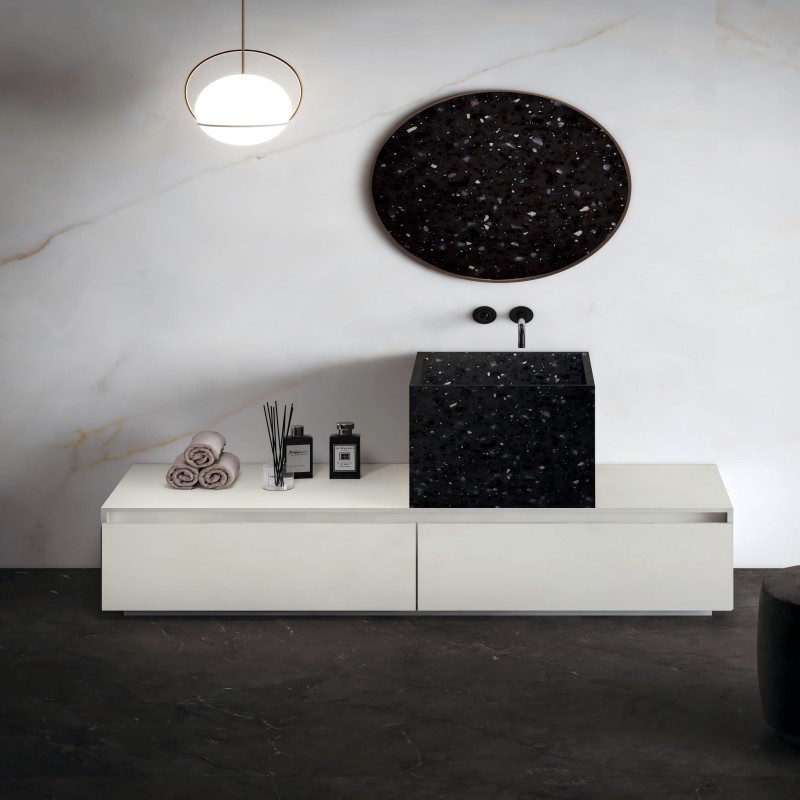
An integrated basin can create a coordinated appearance between the washbasin and vanity countertop.
Fewer Exposed Joints Make Daily Cleaning Easier
One of the most practical benefits of an integrated solid surface basin is the reduction of exposed joints around the sink. In a conventional installation, the basin and countertop may be separate components, with a visible connection that requires sealing and regular inspection.
Soap residue, toothpaste, cosmetics, and moisture can accumulate around these joints. A well-designed integrated basin reduces the number of narrow gaps around the sink, making it easier to wipe the countertop and basin as part of the same cleaning routine.
This is particularly useful in hotel bathrooms, apartment developments, and commercial washrooms where cleaning staff need to maintain multiple washbasins efficiently. Fewer exposed joints can simplify routine maintenance, although they do not eliminate the need for regular cleaning or proper installation.
The actual construction method is important. A one-piece molded basin has no assembled joint between the bowl and countertop, while a fabricated integrated basin may use a bonded connection. Buyers should confirm how the basin is manufactured and finished rather than relying on the word "seamless" alone.
A More Consistent Appearance for Modern Bathrooms
Integrated solid surface basins help create a visually consistent bathroom by coordinating the sink, countertop, and surrounding surfaces. This makes them suitable for contemporary interiors that favor simple lines, balanced proportions, and fewer visible transitions between materials.
The design flexibility is especially useful when a project requires a particular countertop length, basin position, or overall shape. Instead of selecting a standard sink and adapting the surrounding vanity, designers can coordinate the basin and countertop during the design stage.
For a hotel development, this may mean using the same basin configuration across guest bathrooms. In a residential project, it may mean adjusting the basin position to suit the available counter space or the preferred cabinet layout.
KY Quartz provides custom pure acrylic solid surface bathroom vanity countertops with options for different basin configurations and project-specific dimensions.
Custom Dimensions Help Solve Bathroom Layout Challenges
Standard bathroom fixtures may not fit every project. Narrow bathrooms, unusually shaped vanity cabinets, and long commercial washroom counters can all require a more flexible approach to basin design.
Custom integrated basins can be planned around the available countertop dimensions, basin quantity, faucet position, and drainage arrangement. This helps designers coordinate the washbasin with the cabinet, plumbing connections, and surrounding finishes before fabrication begins.
Common design considerations include:
- Countertop length, width, and available installation space.
- Single-basin or double-basin configurations.
- Basin depth, internal shape, and drainage position.
- Faucet holes and compatibility with the selected plumbing fixtures.
- Countertop edges, backsplash details, and cabinet support requirements.
For projects with multiple bathrooms, confirming these details before manufacturing can also help maintain consistent dimensions and reduce coordination problems during installation.
Surface Repair and Maintenance Considerations
Solid surface materials can offer practical maintenance advantages, but their performance depends on the specific material formulation and finish. Many acrylic solid surface products have a uniform composition through their thickness, allowing certain minor surface scratches and scuffs to be refinished.
This differs from a glazed ceramic basin, where damage to the glaze or ceramic body may be difficult to repair without replacing the fixture. For solid surface products, however, the repair method must match the material and surface finish. Deep cracks, structural damage, or damage around a drain opening should be assessed by a qualified professional.
Routine care is also important. A soft cloth and a mild cleaning solution are generally suitable for many solid surface products, but abrasive pads, strong chemicals, and aggressive cleaning methods should only be used when permitted by the manufacturer's maintenance instructions.
Before selecting a basin for a high-use bathroom, buyers should ask about the material composition, surface finish, cleaning recommendations, and available repair procedures. These details provide a more reliable basis for evaluating long-term maintenance than appearance alone.
Where Are Integrated Solid Surface Basins Most Useful?
Integrated solid surface basins are suitable for a range of bathroom projects, particularly where design coordination, customization, and routine cleaning are important.
| Application | Main Consideration |
|---|---|
| Residential bathrooms | Coordinated vanity design, suitable dimensions, and convenient daily cleaning. |
| Hotels and resorts | Consistent appearance across rooms and reduced exposed joints around the basin. |
| Commercial washrooms | Custom countertop lengths, multiple washing stations, and straightforward maintenance. |
| Renovation projects | Adapting the basin and countertop to existing cabinet and plumbing dimensions. |
For projects that require a different basin format, KY Quartz also offers custom pure acrylic solid surface sanitaryware, including freestanding washbasin designs.
The most suitable configuration depends on the intended use, available space, installation method, and maintenance expectations. A custom basin should be selected based on these practical requirements rather than appearance alone.
How to Choose the Right Integrated Basin for a Project
Selecting an integrated basin requires coordination between the design, material, fabrication, and installation teams. The following checklist can help buyers evaluate whether a proposed solution is suitable for the project.
- Confirm the material: Identify whether the basin is made from pure acrylic solid surface, composite artificial stone, or another material.
- Check the construction: Confirm whether the basin is molded as one piece or fabricated with a bonded connection.
- Review the dimensions: Verify the countertop size, basin depth, faucet position, and drainage layout against the project drawings.
- Evaluate maintenance: Request the manufacturer's cleaning and repair recommendations for the selected material and finish.
- Confirm installation details: Check cabinet support, mounting requirements, plumbing compatibility, and site access.
- Review samples and drawings: Confirm the intended appearance and technical details before approving fabrication.
For customized bathroom projects, clear drawings and confirmed specifications help reduce the risk of mismatched dimensions, misplaced plumbing openings, and installation delays.
Buyers can explore the KY Quartz sinks and basins collection to review available basin formats and discuss project-specific requirements.
Frequently Asked Questions
Are integrated solid surface basins easier to clean than separate bathroom sinks?
They can be easier to clean around the sink because the integrated design reduces exposed joints and narrow gaps. Actual maintenance requirements depend on the construction method, surface finish, and cleaning instructions.
Are integrated solid surface basins suitable for hotel bathrooms?
Yes. They can be a practical choice for hotel bathrooms where consistent appearance, customized dimensions, and routine cleaning are important. The material and basin configuration should be selected according to the expected use and maintenance requirements.
Can integrated solid surface basins be customized?
Many manufacturers offer customization options for countertop dimensions, basin positions, basin quantity, faucet openings, and drainage arrangements. Buyers should confirm the available options and provide accurate drawings before fabrication.
What is the difference between a molded basin and a bonded integrated basin?
A molded basin is formed as one continuous piece, while a bonded integrated basin is assembled from separate components using adhesive and finishing techniques. Both can create a coordinated appearance, but their manufacturing and maintenance requirements may differ.
What should buyers confirm before ordering custom integrated basins?
Confirm the material, dimensions, basin configuration, faucet and drain positions, mounting method, surface finish, and maintenance requirements. Approved drawings and material samples help ensure that the finished product matches the project specifications.
Conclusion
Integrated solid surface basins offer a combination of design flexibility, coordinated appearance, and practical maintenance advantages for modern bathrooms. Their reduced exposed joints can simplify routine cleaning, while customizable dimensions and configurations help address different residential and commercial project requirements.
The best choice depends on the material, construction method, installation conditions, and expected use. By confirming these details before fabrication, project teams can select a basin that supports both the bathroom design and its long-term maintenance needs.
For more information about integrated artificial stone basins and customized bathroom vanity solutions, visit KY Quartz and discuss your project requirements with the team.