The difference between traditional terrazzo and epoxy terrazzo

Material Composition


Traditional terrazzo uses Portland cement or white cement as a binder, mixed with aggregates such as crushed stone, glass, and quartz, and then ground and polished to create a surface. Epoxy terrazzo uses a modified epoxy resin as a binder, allowing it to incorporate a wider variety of aggregates (such as natural marble and quartz) and achieve seamless integration.


Performance

Crack Resistance: Epoxy terrazzo's tough polymer material reduces the risk of cracking in temperature fluctuations. Traditional terrazzo, due to its high coefficient of expansion, is susceptible to cracking due to thermal expansion and contraction.


Stain Resistance: Epoxy terrazzo's dense surface resists stains and is easy to clean and maintain. Traditional terrazzo's porous structure easily accumulates stains and requires regular crystallization.


Wear Resistance: Epoxy terrazzo offers excellent compressive and flexural strength, with a service life of up to 10 years. Traditional terrazzo is prone to sanding and cracking, and lacks durability under frequent use. ‌


Color Performance‌: Epoxy terrazzo uses color paste to create richer, more vibrant colors; traditional terrazzo relies on pigments, resulting in a monotonous color. ‌


Applicable Scenarios


Epoxy terrazzo is suitable for high-end commercial spaces (such as shopping malls and hotels) due to its high decorative properties and durability. Traditional terrazzo, being economical, is often used in public facilities such as schools and hospitals.
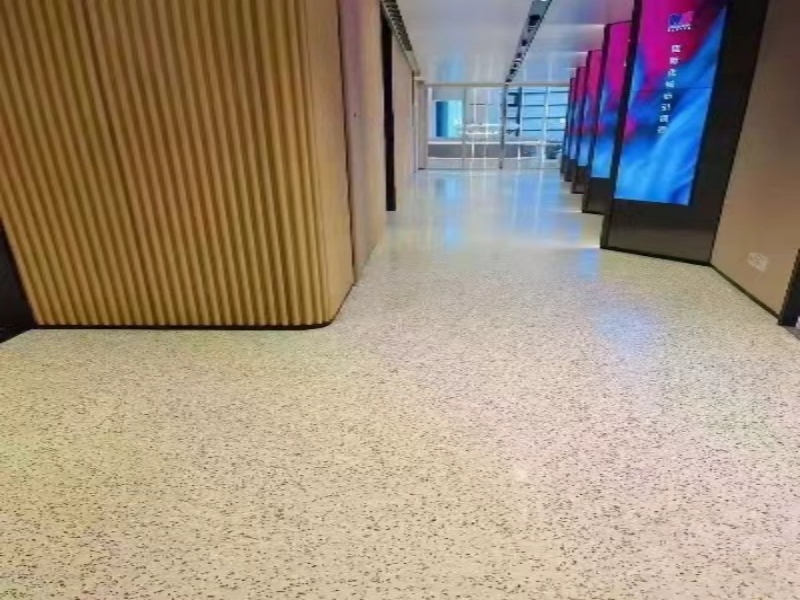
What is epoxy terrazzo?

Epoxy terrazzo is an upgraded version of terrazzo, also known as organic terrazzo. It uses epoxy resin as a binder and is mixed with aggregates such as glass, shells, and gemstones.

Materials and Processes Material composition: Modified epoxy resin is used as the binder, with a wider range of aggregate options (such as jade, quartz, etc.), and a seamless surface is formed through fine grinding and polishing. Construction process: It requires complex processes such as primer coating, aggregate spreading, curing and multiple polishing steps. The finished product has high flatness and bright colors.

Performance advantages:

  1. Decorativeness: It supports stepless color matching and personalized pattern design, with a glossiness close to a mirror effect and strong artistic expression.
  2. Durability: It is resistant to pressure, wear and chemical corrosion, with a service life of more than 10 years and is not easy to crack or discolor.
  3. Easy maintenance: The dense surface is highly resistant to stains, easy to clean, and suitable for places with high hygiene requirements.
  4. Application scenarios: It is mainly used in high-end commercial spaces (such as hotels, shopping malls, and exhibition halls). It is not suitable for outdoor use and is mostly used for interior decoration.


Kitchen floor renovation choice the advantages of epoxy colored sand floor paint

Why do kitchens require special flooring materials?

High-frequency use: The kitchen is the center of family activities, and its flooring endures the rigors of daily cooking.

Common challenges:

Frequent spills of stubborn stains such as oil, sauces, and colorings; Impacts from cooking steam and high temperatures; Risk of heavy objects such as pots and utensils falling; Prolonged standing cooking requires a comfortable and durable floor

Advantages of epoxy colored sand floor paint:

1.Excellent stain resistance and easy cleaning. The dense surface prevents oil and sauce from penetrating. Cleans easily with a single wipe, saving time and effort. Inhibits bacterial and mold growth, meeting kitchen hygiene standards.

2.Excellent waterproof and moisture-proof properties. Forms a seamless waterproof layer, completely preventing water vapor penetration. Protects the base from moisture. Ideal for kitchens that require frequent cleaning.

3.Abrasion-resistant and pressure-resistant for durability. Excellent mechanical properties withstand heavy impacts. Resists friction and wear from sliding tables and chairs. Maintains like-new condition over extended use.

4.Non-slip safety reduces potential safety hazards. The subtle texture provides excellent anti-slip properties. Remains safe even with moisture or oil stains. Ideal for homes with elderly and children.

5.Beautiful and diverse design enhances taste. A wide selection of colors complements various kitchen styles, blending seamlessly with modern minimalist to rustic styles. Enhances the overall aesthetic and value of your kitchen.

6.Easy installation and maintenance. Simple installation process and short construction time. Daily cleaning requires only a mop with water. Stubborn stains can be cleaned with a neutral detergent.

7.High cost-effectiveness and long-term benefits. Initial investment yields long-term value. Reduces daily maintenance costs and time. Long service life and outstanding value.

Epoxy colored sand floor paint