Choosing the right washbasin material is an important decision in bathroom design, especially for hotels, residential developments, commercial buildings, and other projects where appearance, durability, and maintenance all matter. Among the available options, integrated solid surface basins and traditional ceramic washbasins are two popular choices.
While ceramic sinks have been widely used for decades, integrated solid surface basins are gaining attention for their seamless appearance, flexible design options, and convenient maintenance. But which option is more suitable for your project?
This guide compares integrated solid surface basins and traditional ceramic washbasins across several practical factors, helping architects, contractors, developers, and purchasing teams make a more informed decision. KY Quartz Slab, backed by Foshan Kangyi Building Materials Co., Ltd., provides customized artificial stone and solid surface basin solutions for residential and commercial applications.
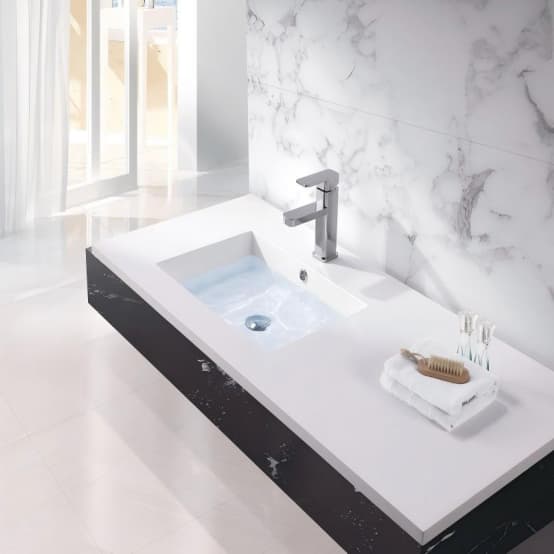
Integrated solid surface basin with a clean, seamless vanity design.
What Are Integrated Solid Surface Basins?
An integrated solid surface basin is a washbasin manufactured as part of a continuous countertop or vanity structure. Depending on the fabrication method, the basin can be molded directly into the countertop or seamlessly bonded using color-matched adhesive. The finished surface creates a visually continuous transition between the basin and surrounding countertop.
These basins are commonly manufactured using acrylic solid surface materials, which typically combine PMMA resin with aluminum trihydrate (ATH) mineral filler. This material composition allows manufacturers to produce smooth surfaces, customized shapes, and integrated designs.
Unlike conventional ceramic sinks, solid surface basins can be fabricated in different dimensions and configurations to match specific bathroom layouts. Common options include:
- Integrated vanity tops with single or double basins.
- Wall-mounted solid surface washbasins.
- Freestanding pedestal washbasins.
- Long countertop basins for hotels and commercial restrooms.
- Custom-shaped basins with concealed or sloped drainage designs.
For projects requiring customized dimensions and coordinated countertop designs, integrated artificial stone basins offer a flexible option for both residential and commercial bathroom spaces.
What Makes Traditional Ceramic Washbasins Different?
Traditional ceramic washbasins are generally manufactured from ceramic clay materials, which are shaped, fired at high temperatures, and finished with a glazed surface. Their smooth, hard, and glossy appearance makes them a familiar choice in residential bathrooms, hotels, apartments, and public facilities.
Ceramic basins are available in various installation styles, including countertop, wall-mounted, pedestal, and undermount designs. Their established manufacturing processes also make standard ceramic products widely available in different shapes and sizes.
However, ceramic basins have some limitations when a project requires customized dimensions or a continuous countertop appearance. In many installations, the basin and countertop are separate components, meaning additional joints, mounting details, and silicone sealing may be required.
Although the glazed ceramic surface is relatively easy to clean, chips and cracks can be difficult to repair without replacing the basin. This is an important consideration for commercial projects where long-term maintenance and replacement costs matter.
Integrated Solid Surface Basins vs. Ceramic Washbasins: Key Differences
Both materials can perform well in everyday bathroom environments, but they offer different advantages depending on the application. The following comparison highlights the main differences that buyers should consider.
| Comparison | Integrated Solid Surface | Traditional Ceramic |
|---|---|---|
| Appearance | Seamless, modern, customizable | Classic, glazed finish |
| Surface | Non-porous, smooth surface | Hard, glazed surface |
| Joints | Can achieve seamless transitions | Often requires separate installation joints |
| Impact Resistance | Generally more impact-resistant and repairable | More susceptible to chipping |
| Customization | Flexible sizes, shapes, and colors | More limited for standard products |
| Surface Repair | Minor scratches can often be refinished | Chips and cracks are difficult to repair |
| Typical Applications | Hotels, villas, commercial restrooms | Residential and standard bathrooms |
The main difference is not simply the material itself. It is also how the basin is designed, fabricated, installed, and maintained. For projects that prioritize integrated countertop construction and design flexibility, solid surface basins can offer additional advantages.
Seamless Design and Easier Bathroom Maintenance
One of the most noticeable advantages of integrated solid surface basins is their seamless appearance. When the basin and countertop are manufactured as a continuous unit or professionally bonded with matching adhesive, visible gaps around the sink can be significantly reduced.
This design is particularly useful in hotel bathrooms, luxury residential developments, and public restrooms. Fewer exposed joints mean fewer areas where soap residue, dust, and moisture can accumulate.
Traditional ceramic washbasins are also relatively easy to clean because of their glazed surfaces. However, separate countertop installations may create additional sealing joints that require periodic inspection and maintenance.
For facilities with frequent daily use, such as hotels and commercial washrooms, the reduced number of exposed joints can make routine cleaning more convenient.
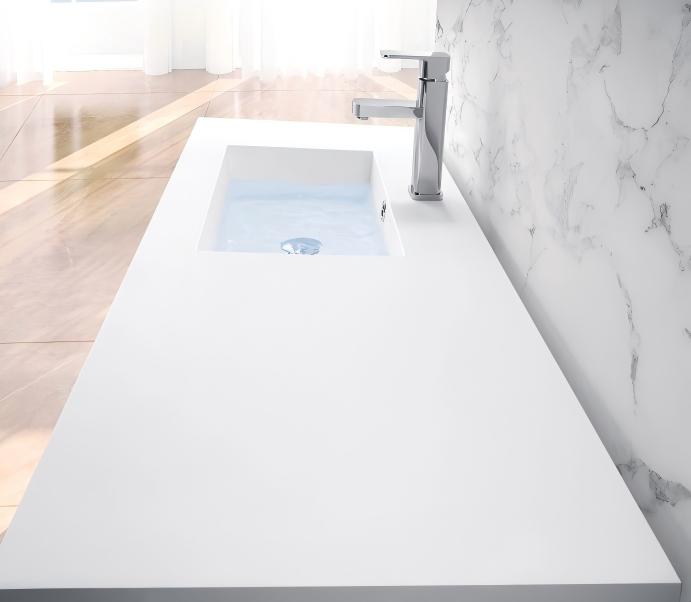
A seamless integrated basin design for contemporary bathroom interiors.
Durability, Scratch Resistance, and Long-Term Repair
Durability is another important factor when selecting bathroom basins, particularly for hotels, healthcare facilities, and commercial developments where fixtures experience frequent use.
Solid surface materials have a relatively uniform composition throughout their thickness. Unlike a thin glazed coating, the material is not dependent on a separate decorative surface layer. Minor scratches, scuffs, and certain surface stains can often be removed through suitable refinishing procedures.
Pure acrylic solid surface basins also offer good impact resistance compared with brittle ceramic products. However, their actual performance depends on material formulation, thickness, fabrication quality, and installation conditions.
Ceramic washbasins are hard and resistant to everyday abrasion, but sudden impacts from heavy objects may cause chips or cracks. Once the ceramic body is damaged, restoring its original appearance can be difficult.
For buyers evaluating customized pure acrylic solid surface bathroom vanity countertops, it is worth considering not only initial product quality but also the possibility of future surface maintenance and repair.
Customization and Design Flexibility for Different Projects
Standard ceramic washbasins are suitable for many conventional bathroom layouts. However, architects and interior designers may need more flexibility when working on projects with unusual dimensions, specific design concepts, or multiple washbasin stations.
Integrated solid surface basins offer more freedom in terms of product dimensions, basin depth, edge profiles, colors, and countertop configurations. Manufacturers can work from architectural drawings to develop solutions that fit the actual installation space.
Common customization options include:
- Custom dimensions: Adjust basin length, width, and depth according to bathroom layouts.
- Single or double basins: Configure different basin arrangements for residential and hospitality projects.
- Custom drainage: Incorporate sloped drainage surfaces or concealed drainage channels.
- Color selection: Choose solid colors, neutral tones, or marble-inspired patterns.
- Countertop integration: Coordinate the basin, vanity top, backsplash, and front apron.
For example, a hotel development may require long vanity countertops with multiple washbasins, while a residential villa may prioritize a customized single-basin vanity with a distinctive shape and finish.
These requirements are easier to accommodate through custom solid surface fabrication. KY Quartz Slab supports customized basin configurations and OEM/ODM manufacturing for different project requirements.
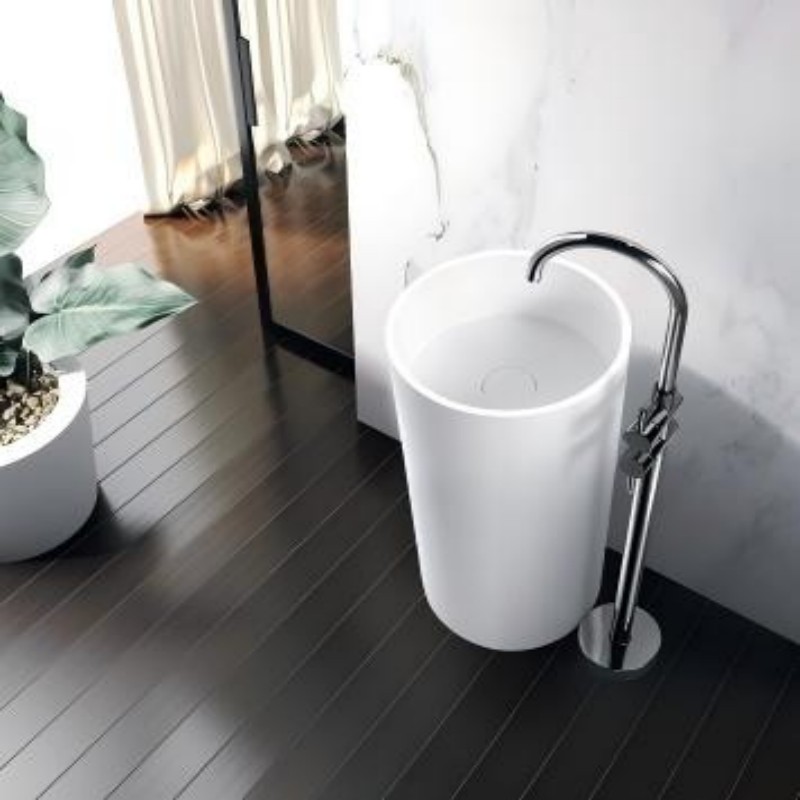
Freestanding acrylic solid surface washbasin with a minimalist design.
Which Washbasin Is Better for Hotels and Commercial Bathrooms?
For hotel developments and commercial bathroom projects, the choice of washbasin should consider cleaning frequency, design consistency, installation requirements, and long-term maintenance.
Integrated solid surface basins are particularly suitable for projects that require:
- Continuous vanity countertops with integrated basins.
- Consistent appearance across multiple guest bathrooms.
- Custom dimensions to fit architectural drawings.
- Reduced exposed joints for easier cleaning.
- Repairable surfaces for long-term maintenance.
Traditional ceramic washbasins remain a practical choice for standard bathroom renovations, budget-conscious projects, and applications where conventional basin sizes are sufficient.
For large-scale developments, however, integrated solid surface solutions can simplify the design coordination process, particularly when multiple washbasins need to follow the same dimensions and visual standards.
Commercial buyers can also explore custom solid surface bathroom sinks and basins to compare available basin styles and project configurations.
How to Choose the Right Basin Material for Your Project
There is no single material that suits every bathroom. The right choice depends on the intended application, design requirements, maintenance expectations, and available budget.
Before selecting a basin, buyers should evaluate several practical considerations:
- Project type: Determine whether the basin is intended for residential, hospitality, healthcare, or public commercial use.
- Installation dimensions: Check countertop measurements, cabinet structure, faucet positions, and drainage connections.
- Material quality: Confirm the resin formulation, surface characteristics, thickness, and manufacturing standards.
- Maintenance requirements: Consider daily cleaning methods, repair options, and the availability of replacement components.
- Customization needs: Decide whether standard dimensions are sufficient or custom fabrication is required.
- Supplier capabilities: Review product samples, manufacturing experience, quality control, packaging, and export experience.
Working with an experienced manufacturer is particularly important for customized bathroom projects. Accurate drawings, material selection, and fabrication details can help reduce installation problems and improve the consistency of the finished products.
Why Choose KY Quartz Slab for Integrated Solid Surface Basins?
KY Quartz Slab is backed by Foshan Kangyi Building Materials Co., Ltd., a manufacturer specializing in artificial stone research, development, production, and customized surface solutions.
For residential and commercial bathroom projects, the company provides integrated artificial stone basins, acrylic solid surface washbasins, and customized bathroom vanity countertops.
Its product solutions support different basin styles, including integrated vanity sinks, freestanding basins, and customized countertop configurations. Buyers can also discuss specific dimensions, colors, drainage arrangements, and installation requirements according to their project drawings.
Whether you are sourcing washbasins for a hotel development, a residential project, or a commercial restroom, selecting a suitable material and reliable manufacturing partner is essential for achieving the desired result.
Visit KY Quartz Slab to explore its artificial stone products and discuss customized basin solutions with the manufacturing team.
Frequently Asked Questions About Solid Surface and Ceramic Washbasins
Are integrated solid surface basins better than ceramic washbasins?
Integrated solid surface basins offer more customization flexibility, seamless countertop designs, and repairable surfaces. Ceramic washbasins provide a familiar glazed finish and are suitable for standard bathroom installations. The better option depends on project requirements.
Do solid surface basins stain easily?
Quality acrylic solid surface materials have non-porous surfaces that resist the absorption of everyday liquids, cosmetics, and soap residue. Regular cleaning with mild detergent helps maintain their appearance.
Can integrated solid surface basins be customized?
Yes. Manufacturers can customize basin dimensions, depth, shape, color, drainage design, faucet openings, and countertop configurations according to project drawings.
Are solid surface washbasins suitable for hotels?
Yes. Integrated solid surface washbasins are suitable for hotel bathrooms because they offer consistent designs, customizable dimensions, smooth surfaces, and fewer exposed joints for routine cleaning.
Can scratches on acrylic solid surface basins be repaired?
Minor scratches and surface scuffs can often be removed through appropriate sanding and polishing procedures. Deep structural damage should be assessed by a qualified repair professional.
What information should buyers provide when ordering custom solid surface basins?
Buyers should provide the required dimensions, basin quantity, installation type, faucet and drainage positions, preferred material, color, and architectural drawings. These details help manufacturers prepare accurate quotations and production specifications.
Looking for Custom Solid Surface Basin Solutions?
Whether you need integrated vanity basins, freestanding washbasins, or customized bathroom countertops, KY Quartz Slab can help develop solutions based on your project requirements.